
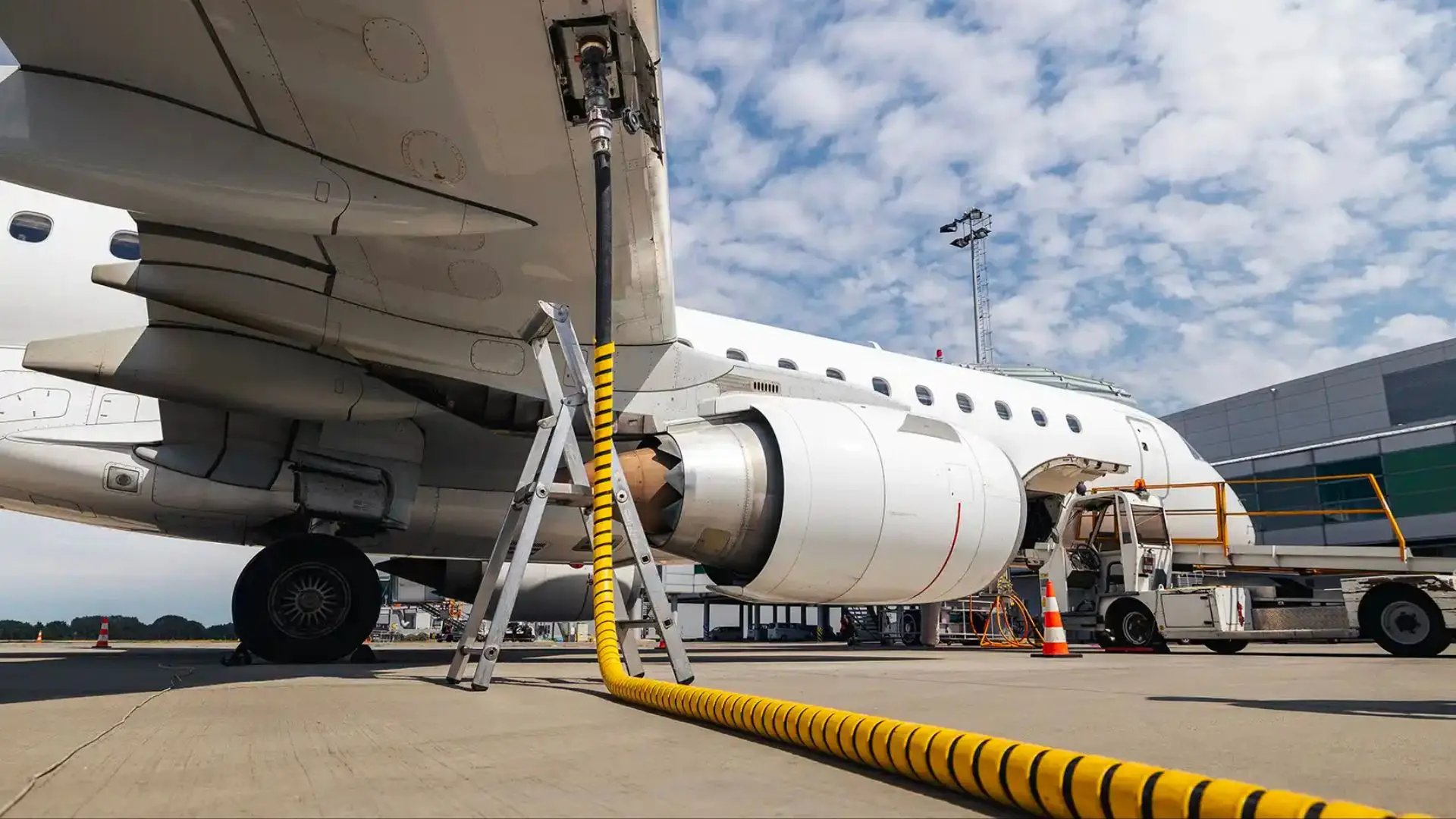

Commercial aviation faces an unprecedented energy transition as rising passenger volumes threaten to outstrip traditional fuel supplies.
Research supported by the National Aeronautics and Space Administration (NASA) has identified five potential alternative fuels, including hydrogen and Sustainable Aviation Fuel (SAF), that could reshape commercial flight by 2050 while reducing reliance on fossil-derived jet fuel.
The initiative, conducted under the Advanced Aircraft Concepts for Environmental Sustainability (AACES) 2050 program, examines the feasibility of replacing conventional Jet A with cleaner burn alternatives.
Alongside hydrogen and SAF, researchers evaluated Liquefied Natural Gas (LNG), ethane, and synthetic drop-in options classified as Jet X. Each energy carrier presents distinct structural, economic, and operational trade-offs for future airframe design.
Hydrogen has gained significant attention due to its high energy density by weight, which is three times that of standard kerosene. However, liquid hydrogen must be stored at cryogenic temperatures below -253°C, requiring specialized insulated fuel tanks.
These physical constraints demand larger fuselages or entirely new shapes, such as the blended wing body concept developed by JetZero, to accommodate bulky storage systems without compromising payload capacity.
In contrast, SAF serves as a drop-in solution compatible with existing airport infrastructure and engine architectures. Because current production accounts for less than one percent of global fuel uptake, scaling SAF supply remains a critical barrier.
Meanwhile, alternatives like LNG offer potential supply security as petroleum refining shifts, though they still release fossil carbon when combusted.
Aerospace engineers emphasize that no single fuel wins on every dimension. Decarbonizing commercial flight by mid-century will require simultaneous advances in airframe aerodynamics, propulsion systems, and ground refueling infrastructure.
NASA plans to use the ongoing industry studies to guide research investments and technology risk reduction over the coming decade.
Comments (0)
Leave a Comment
No comments yet. Be the first to share your thoughts!