
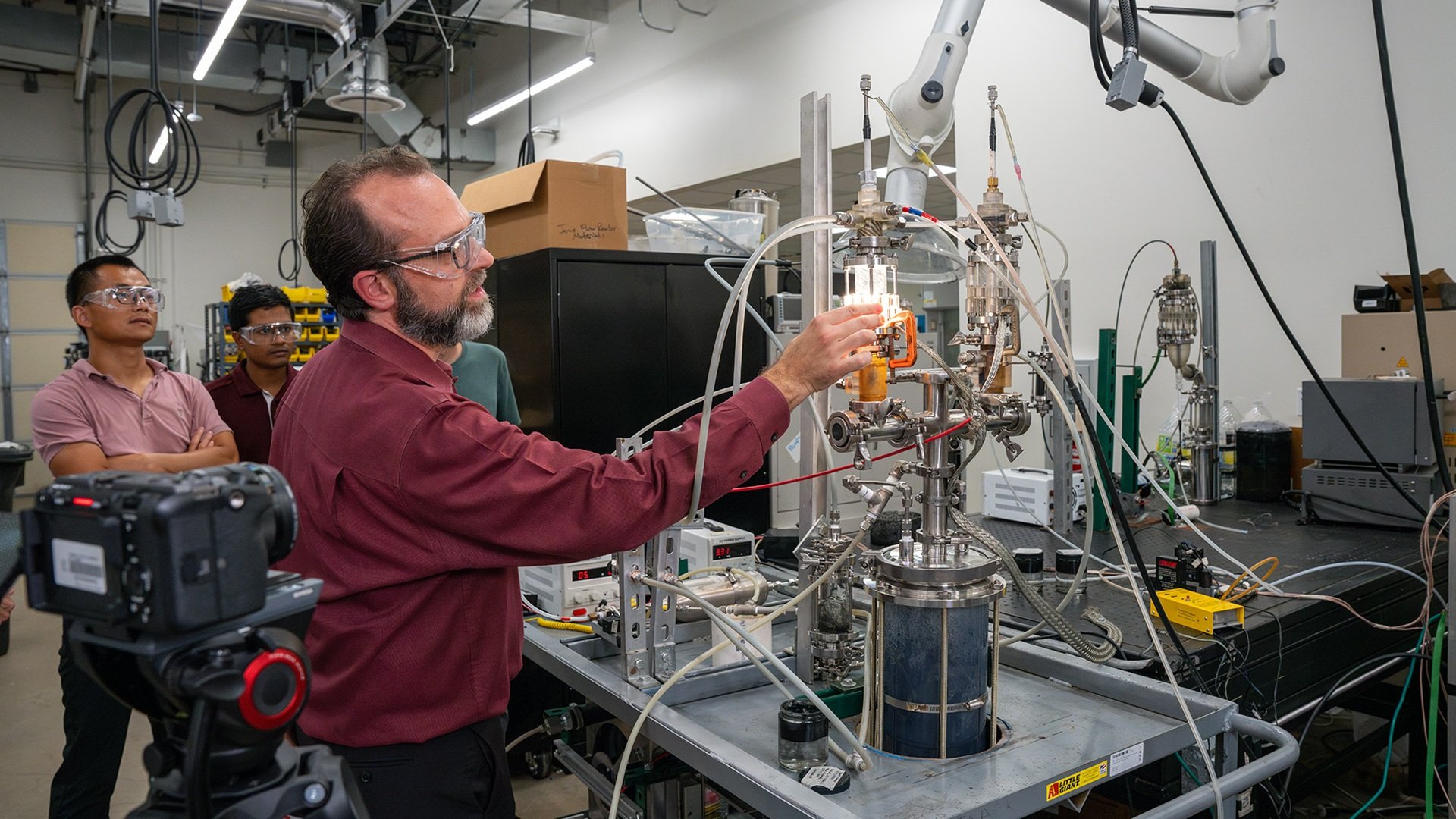

Researchers at Texas A&M University have discovered a new plasma-based manufacturing method that converts natural gas into high-purity graphene oxide. The process, which occurred accidentally during a hydrogen-production research initiative, offers a scalable alternative to traditional graphite-based manufacturing techniques.
The study, published in Nature Communications, describes a system that uses methane as the primary carbon input. By deploying a non-thermal atmospheric nano-second pulsed plasma (NSPP) process, the engineers successfully separated carbon from hydrogen at room temperature and under ambient atmospheric conditions.
Traditionally, graphene oxide production requires mining bulk graphite, which companies then break down through chemically intensive exfoliation processes. These older systems rely on concentrated acid baths and high-pressure thermal environments, which generate substantial chemical waste and require major energy inputs.
The new atmospheric plasma system builds the nanomaterial from the bottom up. Electrical discharges break apart the methane molecules at a liquid-phase growth interface where a water surface acts as the substrate. Carbon species then nucleate and assemble directly into single-layer graphene oxide sheets.
Oxygen-containing functional groups are integrated automatically through interactions with the water surface. Because the material forms on a flowing liquid surface instead of depositing onto the reactor walls, the system avoids the accumulation bottlenecks that typically interrupt continuous production in conventional plasma reactors.
Gas chromatography measurements confirmed that the system generates substantial molecular hydrogen gas alongside the solid carbon nanomaterial. This co-production provides a clean energy source as a valuable byproduct, which operators can capture instead of flaring or venting into the atmosphere.
The discovery originally positioned hydrogen as the primary output, but researchers later shifted focus to the solid carbon. When the engineering team observed the structural properties of the material, they realized it was high-purity, single-layer graphene oxide.
A single-layer architecture provides superior electrochemical performance compared to multilayer variations. This high-purity material is highly sought after for advanced industrial manufacturing, particularly as a conductive scaffold inside lithium-ion battery anodes to improve structural integrity and overall energy storage capacity.
Beyond energy storage, graphene oxide disperses readily in water, which allows it to be utilized in conductive inks, protective coatings, advanced electronics, and composite construction materials. The ability to fine-tune the oxygen content gives engineers precise control over surface chemistry, although further scale testing is required.
The prototype configuration operates with a four-gap reactor design that currently yields up to five grams of graphene oxide per day. While this scale is small, it represents a substantial increase in throughput compared to older non-thermal plasma methods.
Commercial energy firm LTEOIL sponsored the original research project through a master research agreement with the Texas Engineering Experiment Station (TEES). The project partners are now advancing plans to equip a dedicated research and development facility to demonstrate commercial scaling.
By using electricity, methane, and water under mild ambient conditions, the process lowers the capital and operational expenses associated with nanomaterial manufacturing. The mechanism provides a direct method to reroute hydrocarbon resources into solid functional assets rather than greenhouse gases.
The system avoids reliance on imported graphite feedstocks, which simplifies local manufacturing supply chains. Researchers are currently focusing on further reactor optimization, which will help establish the precise parameters necessary for transitioning the prototype into high-volume industrial operations.
Comments (0)
Leave a Comment
No comments yet. Be the first to share your thoughts!