
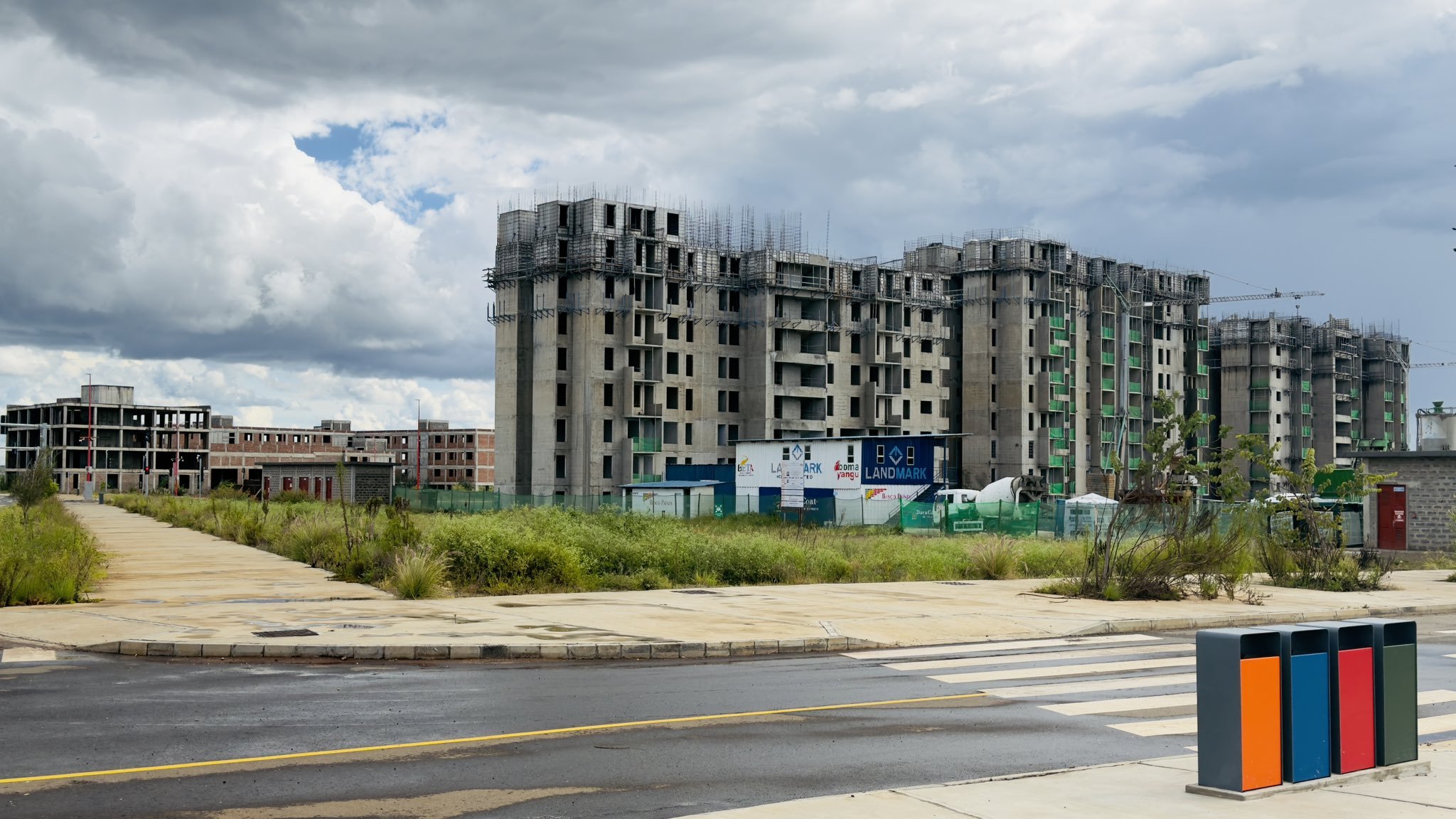

Recent site updates from Konza Technopolis in Machakos County indicate that several blocks within the affordable housing project have reached their full vertical height. Images shared by Professor Emmanuel Mutisya on April 12, 2026, show at least four substantial residential towers undergoing active construction within the tech city's designated zones.
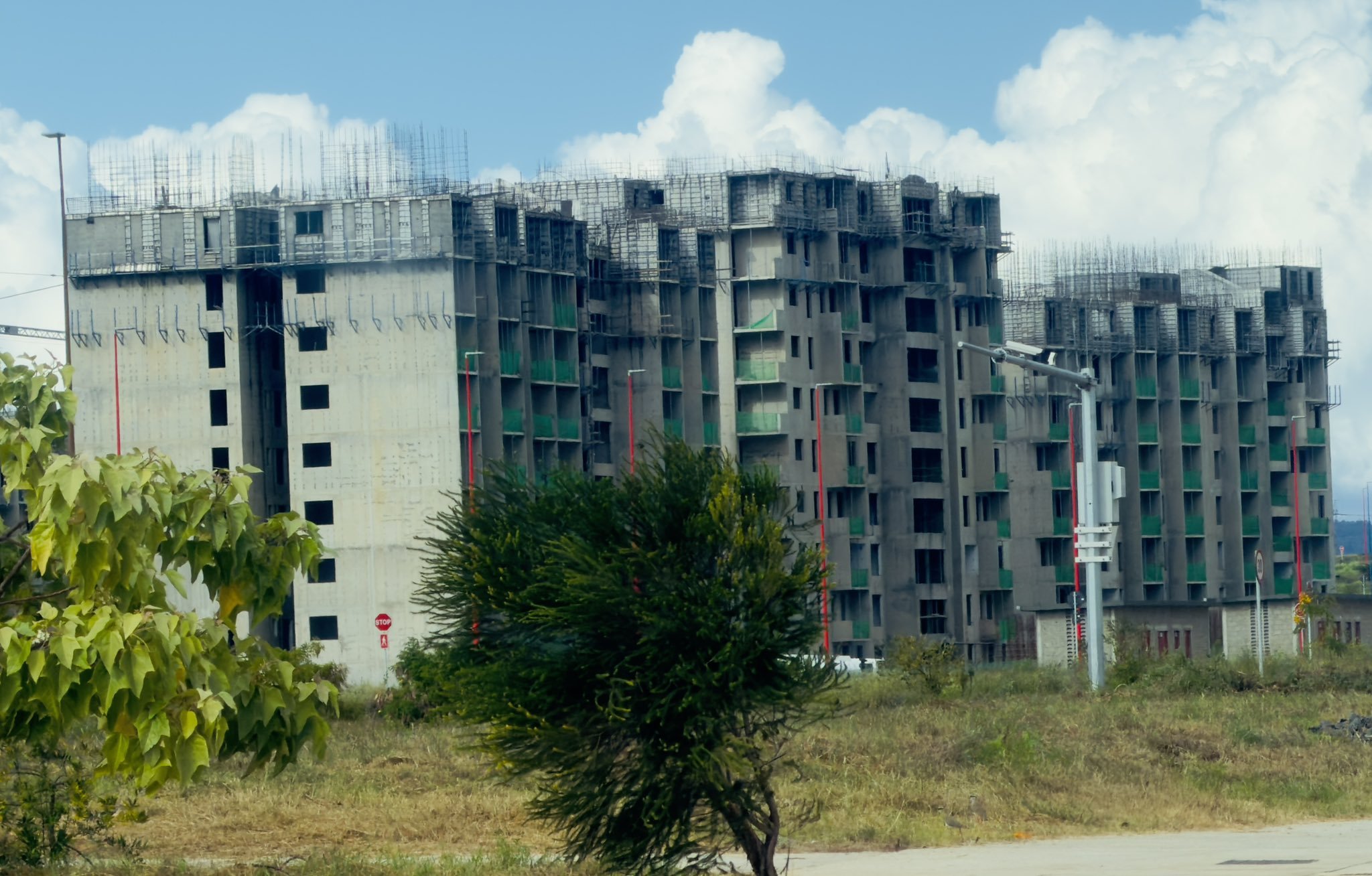
The structures appear to be in the gray-work phase, with concrete frames and external walling largely completed for the primary blocks. These developments are part of the broader commitment made by President Ruto to provide decent, low-cost accommodation for workers and residents within the special economic zone.
Konza Technopolis, often referred to as Africa’s Silicon Savannah, is designed to host a mix of commercial, educational, and residential spaces. The inclusion of affordable housing is intended to prevent the growth of informal settlements around the multi-billion shilling infrastructure project.
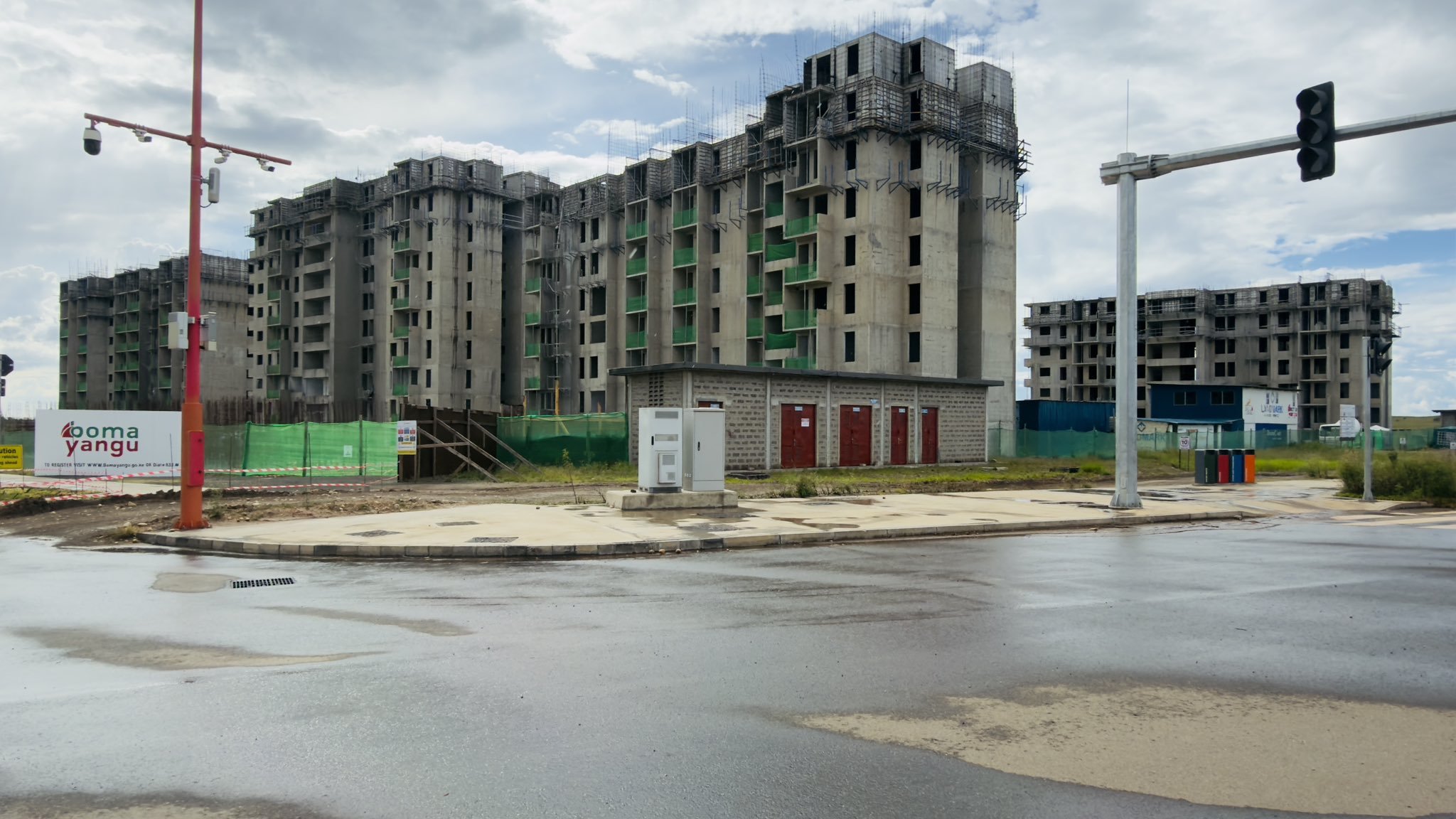
The current visual evidence shows the buildings situated along paved internal roads, which are already equipped with street lighting and pedestrian crossings. This suggests that the primary utility infrastructure in this sector of the city is functional while the housing units move toward the finishing stages.
Construction crews have utilized reinforced concrete frame technology for the blocks, which appear to stand between six and eight stories tall. The architectural footprint shows a high-density design, which is a core requirement of the national affordable housing framework to maximize land use efficiency.
President Ruto has frequently emphasized that these projects serve a dual purpose of providing homes and creating immediate employment for local artisans. At the Konza site, the scale of the masonry and structural work reflects a significant deployment of labor and materials over the recent months.
Observers of the project note that the completion of these units is critical for the liveability of Konza. As more tech firms and government agencies move their operations to the hub, the demand for on-site housing is expected to rise sharply.
The site photos also show that landscaping and green spaces are being integrated around the residential clusters. While the buildings remain in their raw concrete state, the surrounding road networks and drainage systems appear mostly finished, which is a departure from many urban developments that lack proper planning.
Government officials involved in the project have maintained that the Konza units will adhere to strict quality standards while remaining accessible to low-income earners. The financing for such projects typically involves a mix of public funding and private sector partnerships under the housing levy framework.
As the project moves into the second half of 2026, the focus is expected to shift from structural shell construction to internal fittings, plumbing, and electrical installations. The pace of work at Konza is seen as a barometer for the success of the President’s plan to decentralize development away from the Nairobi central business district.
Professor Mutisya, who shared the updates, noted that the progress aligns with the administration's "The Plan" manifesto. This document outlines the roadmap for bridging the housing deficit in Kenya, which currently stands at over two million units.
The Konza Technopolis Development Authority continues to oversee the integration of these housing blocks into the city's smart-grid system. This will ensure that once the units are occupied, they benefit from the advanced ICT infrastructure that defines the technopolis.